
Designed around what manufacturing usually destroys.
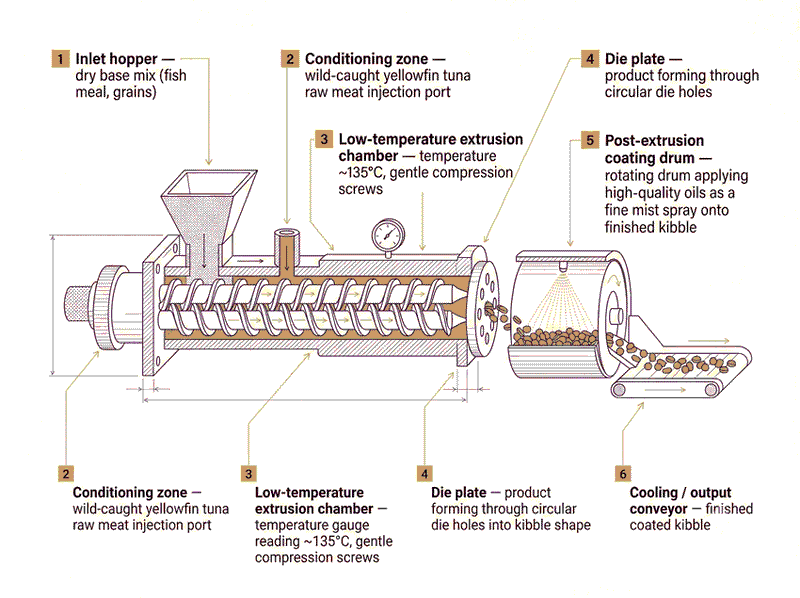
Commercial processing reliance on intense thermal rendering strips premium raw inputs of their core biological value. RawFusion architecture re-engineers this sequence—protecting sensitive lipid matrices so your dog digests true, bioavailable nutrition.
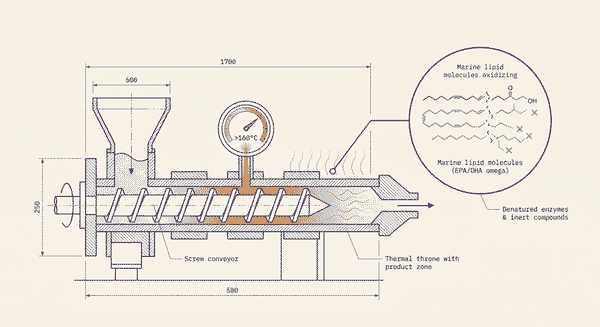
Standard Kibble Heating
Traditional dry kibbles are manufactured using intense thermal extrusion techniques exceeding 160°C. While this sanitizes production output speed, it instantly denatures active enzymes and causes delicate structural marine lipids—like EPA and DHA omega chains—to oxidize, rendering them chemically inert before they ever hit the bowl.
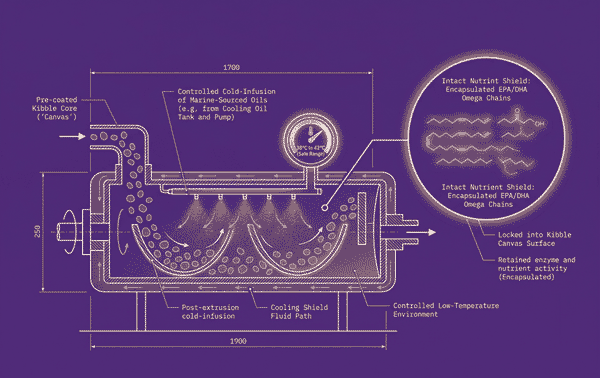
The RawFusion Cold-Shield
Instead of exposing vital compounds to heat, RawFusion technology stabilizes raw lipid profiles in a temperature-controlled cold chain. By infusing the core kibble canvas with highly bioavailable, marine-sourced structural oils at safe physiological boundaries, we lock in delicate nutrient pathways without causing cellular destruction.
Indian Ocean Sourcing
We exclusively extract lipids from wild-caught, deep-sea tuna sourced from pristine Indian Ocean fisheries. Unlike static farmed options, wild-caught marine tissue retains a naturally diversified, high-potency array of long-chain fatty acids.
8–15× Lipid Retainment
Independent food science laboratory metrics show that the RawFusion cold chain retains between 8 to 15 times more active, unoxidized bioavailable omega-3 fatty acids per gram compared to standard dry-heat rendered products.
35 Years of Research
Formulated by leading food science teams in Sri Lanka. This protocol is designed entirely around preventing the precise molecular damage that traditional commercial manufacturing methods typically leave behind.